01 / Background
Background
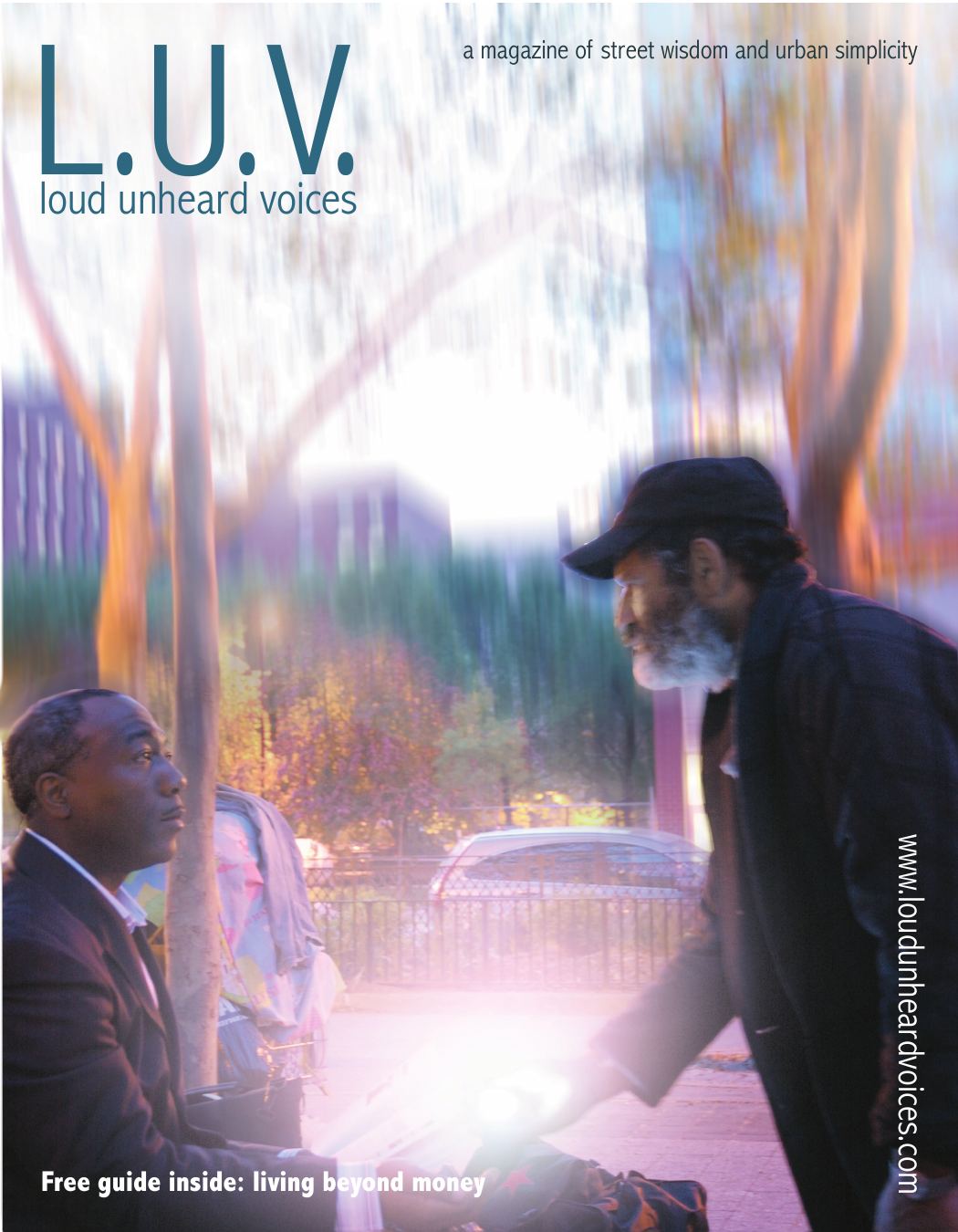
Loud Unheard Voices is, perhaps, my greatest failure. I think about it often, and I still reflect on its lessons today, almost twenty years later.
When I was twenty-five, I was living in New York City, attending college, and working as a bike messenger. I had just returned from an unforgettable month in Thailand and Cambodia, feeling both deeply grateful and deeply guilty about my privilege. I wanted to give something back. Through a couple of late-night adventures and unlikely coincidences, I became friends with a homeless man named Jeff Mendoza. Maybe that is why, when I saw a local shelter was looking for volunteers, I reached out.
The shelter wanted to start a weekly drop-in space called the Letter Home Project, where residents could use writing supplies, envelopes, and stamps to contact loved ones. I was put in charge. Every Tuesday night, I showed up for an hour. At first, no one came. For months, I made an announcement in the common area and then sat alone at a folding table in a back room, waiting.
02 / Purpose
Purpose
Eventually, people started showing up. A core group formed; others drifted in. We did not end up writing many letters. Instead, we wrote for ourselves. The group became a quiet writing circle: thirty or forty minutes of silent writing, followed by reading and discussion. Shaquest was a poet. Nabu wrote philosophical reflections. Jay brought jokes, song lyrics, and observations. I loved those guys.
Anyone who wanted to could leave work with me, and I saved it all in a manila folder. After a while, we realized we had something special. I applied for a grant from my college to create a one-time print journal of the group's best writing.
One theme kept surfacing as we planned the journal: the daily fight for dignity in a world that looks away. These were people with dreams, memories, and ideas who spent much of their lives being deliberately unseen. The journal would showcase their writing and serve as a survival guide, with practical advice, encouragement, and resources for people trying to survive on the streets. We hoped to distribute it across Manhattan. Some members talked about mailing it to their children.
03 / Process
Process
I bought Adobe InDesign and taught myself print layout. We spent our weekly meetings writing, editing, and debating fonts and formatting. New participants learned about the publication and chose whether they wanted to contribute.
Over time, I had grown suspicious of the shelter's leadership. Residents shared stories that made me wary, and I had seen how funding and image could seem to matter more than people. I had a good relationship with the front-line staff, but intentionally kept the project under the radar from management. The funding came from my school, and I did not see why shelter leadership needed to be involved.
Were I doing this now, I would understand the wisdom of building buy-in. I would better appreciate the complexities of running a nonprofit and the balancing act between ideals and institutional survival. But I was young and a little self-righteous. I told the shelter only that we were publishing a small newsletter.
Then things moved fast. I received a volunteer appreciation award. A week later, someone from leadership visited the group and saw what we were really making. They called it 'promoting the homeless lifestyle' and said they could not allow it to be published. I pushed back—angrily and self-righteously. I insisted it was outside their jurisdiction. I was wrong.
04 / Outcome
Outcome
The shelter fired me, banned me from the building, and contacted my college to threaten legal action. The funding was pulled. I could reapply only if I worked with the group offsite and used newly created writing.
I tried. We met in the park a few times, but the structure, consistency, and shared momentum had been broken. We could not hold it together. The journal has been sitting on my hard drive ever since.
To Sha, Nabu, Jay, and everyone else: I am sorry. You had more at stake than I did. I should have handled it differently. I hope you have a home. I hope you feel loved. And I hope you are still writing.
05 / Key Learnings
Key Learnings
Good intentions and meaningful relationships do not excuse weak stakeholder management. The project taught me that institutional constraints are part of the design context, even when I disagree with them, and that participants bear the cost when a project leader ignores those realities.
It also taught me to distinguish between making space for other people's voices and imagining that I can protect or represent those voices by force of conviction alone. The failure belongs in this portfolio because it changed how I lead community work, build trust, and assess who has the most at stake in a decision.